Does a Septic Alarm Mean My Tank Is Full?
By Minnesota Sewer Pros · Prepared for Owner review
24/7 Emergency Septic Service: 612-816-8013
An alarm measures a condition at a sensor. It does not measure how much sludge is in every septic tank.
No—a septic alarm does not always mean your septic tank is full of solids or ready for routine pumping. A high-water alarm usually warns that liquid has reached a sensor in a pump chamber, while a holding-tank alarm warns about storage capacity. Power loss, a stuck float, a blocked line, pump failure or excess inflow can also be involved. Reduce water use, identify the alarm from its exterior label and get professional advice instead of assuming every alarm calls for the same pump-out.
A working septic tank normally contains liquid
After a septic tank is pumped, ordinary household use brings liquid back to its designed operating level. That is part of normal operation, not evidence that pumping failed. Solids settle as sludge and float as scum, and clearer effluent leaves for further treatment. What matters for maintenance is the accumulation of solids and the condition of the tank and outlet components. Looking at a liquid surface, even if it were safe to do so, would not reliably answer when pumping is needed.
High water in a pump tank is a different question
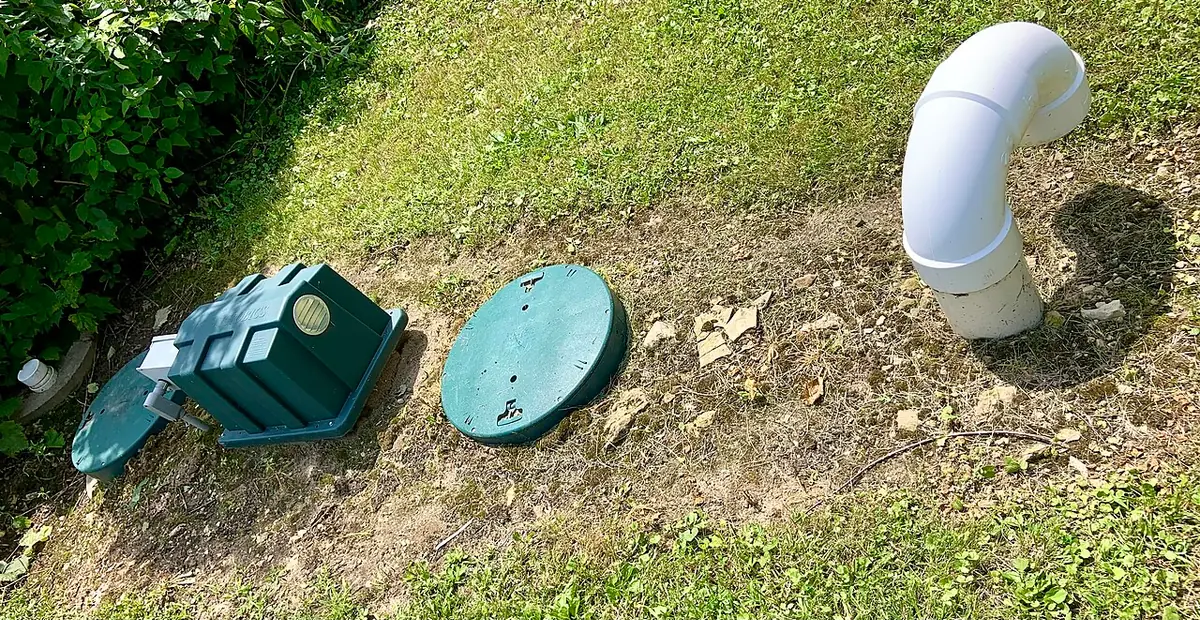
A pump tank stores effluent temporarily so a pump can move it to the next component. The controls start and stop pumping, and a separate alarm may warn if the level rises too high. That warning can happen while the preceding septic tank still has acceptable solids levels. A mound system often uses this arrangement. Repeatedly resetting controls or switching the pump to manual operation can defeat the intended dosing or hide a fault, so leave diagnosis and control adjustments to qualified personnel.
A holding tank really does run out of storage
A holding tank has no intended outlet to a soil treatment area. Wastewater stays there until removed. Its high-level alarm is therefore a direct warning about remaining storage, though sensor faults are still possible. Minnesota Rule 7080.2290 specifies a 75-percent capacity alarm unless regularly scheduled pumping is used. That state provision is not permission to ignore an installed alarm or a stricter permit condition, and it does not tell you how many hours of household use remain.
Does silencing the alarm solve anything?
Silencing an audible alarm may stop the noise while you arrange service, if the manufacturer provides that function, but it does not lower the water or repair the cause. Record the light or message before acknowledging it. Avoid turning off the whole control system, opening panels, bypassing sensors or repeatedly resetting breakers. If any equipment is in floodwater, keep clear. Never enter a chamber or remove covers to check its depth; the risks include falls, toxic gases and electrical shock.
Can I wait until my scheduled pumping visit?
Do not assume that a future maintenance appointment is soon enough for an active alarm. Call the office, explain the system type, report current symptoms and ask whether the visit needs to change. Stop system use when sewage is backing up or surfacing. If the cause is a failed pump, a routine pump-out alone may leave the failure unresolved. If the system is flooded, automatic emptying can introduce other hazards, so the site conditions need assessment first.
Which records help answer the full-tank question?
Your permit drawing identifies which tanks and soil components exist. The management plan describes operation and maintenance, and past pumping reports may document measured solids and tank condition. Minnesota's at-least-three-year assessment requirement is distinct from an alarm response and from a full compliance inspection. A home near Waconia with a mound and a seasonal property with a holding tank need different service discussions even when their alarms sound similar.
Get the right service rather than guessing
Call Minnesota Sewer Pros at 612-816-8013 for Complete Septic Service, or describe an urgent alarm when requesting 24/7 Emergency Septic Service. Mention recent power outages, heavy rain, unusual water use and any backup. Keep water use low until you have situation-specific advice. The goal is to find what the warning actually means, not to sell a pump-out or replacement based on the word full alone.